
Sports Medicine in Munich
Sports medicine in Munich
Sports medicine addresses acute injuries, overload problems and the safe progression back to training. Daniel Berthold combines orthopedic diagnosis with an assessment of movement, tissue capacity and sport-specific demands. Clinical examination and treatment in Munich are provided through OrthoCenter.
At a glance
Key facts
- Acute injuries and gradual-onset overload symptoms
- Sport-specific assessment instead of diagnosis by imaging alone
- Rehabilitation targets linked to the demands of training and competition
- Return-to-sport decisions based on function, load response and risk
Your consultation in Munich
Non-surgical and surgical sports orthopedics in Munich.
Sports medicine starts with the injury and the activity you want to return to. Dr. Daniel Berthold's work combines sports injury assessment, conservative treatment, surgical evaluation and rehabilitation planning. An operation is one possible treatment decision, not the starting assumption.
For a recreational runner, the main problem may be pain after a few kilometres; for a team-sport athlete, instability during changes of direction. Explain what you still cannot do, as well as what the scan reports. When surgery is considered, discuss non-operative alternatives and the practical demands of recovery in the same conversation. Consultations in English are available to people living in Germany and to visiting patients.
What should a clear treatment recommendation explain?
It should identify the problem, goal, alternatives and limitations. Ask how improvement will be measured, when progress will be reviewed and what happens if recovery does not progress. Choosing not to operate needs a clinical rationale, just as choosing surgery does.
Consultation information updated:
Sports injury assessment in Munich
Football
Hamstrings, groin, knee and ankle: from the first examination to sprinting, changes of direction and team training.
Daniel Berthold has experience caring for professional athletes, including players from the Bundesliga and the Premier League. Individual assessment considers training, playing position and competition demands.
Sudden pain during a sprint, symptoms when kicking and an unstable knee after a tackle require different examinations. Injury mechanism, pain location, strength and mobility guide the assessment. Ultrasound or MRI can help when the result would answer a specific treatment question.
Groin pain does not automatically mean an adductor injury. The Doha agreement distinguishes adductor-related, iliopsoas-related, inguinal and pubic-related symptoms, alongside hip-related and other causes. Classification uses history and physical examination; more than one cause may coexist.
Treatment depends on the injured structure. Progressive rehabilitation is often central; some substantial tendon, ligament or joint injuries warrant a surgical assessment. Comfortable jogging alone does not establish readiness for football. Acceleration, braking, direction changes and ball skills need a staged return. Team training, competition and previous performance are separate milestones.
Sports injury assessment in Munich
Running
Assess load-related pain, use running analysis for a specific question and plan the return to running.
Record where the pain occurs, how far you can run before it starts and how it feels the next morning. Bring your recent training history and relevant reports. New focal bone pain needs assessment for a bone stress injury before further running.
Gait and running analysis at OrthoCenter Munich assesses movement alongside strength and symptoms. Findings may lead to changes in running volume, targeted exercises or further investigation. The measurements you need are agreed before your appointment.
Treatment and return to running combine load adjustment, progressive strength work and a staged running programme. Symptoms during and after exercise and the needs of the injured tissue guide progression. The Run Code explores running performance, training and physical capacity. A free German-language sample is available.
Sports injury assessment in Munich
HYROX & functional training
Consider running and strength endurance together: knee, shoulder and tendon symptoms under changing loads.
Knee pain during lunges, symptoms when pulling the sled or pain only in the final running interval: describe exactly when the problem starts. Note recent increases in running distance, weights and training frequency.
For knee symptoms, I assess swelling, mobility, strength and the movement that provokes pain. Shoulder assessment focuses on pulling and overhead tasks. If a structural injury is suspected, targeted imaging can help clarify the findings.
Your return plan adjusts running distance, pace and station loads to the injury and stage of healing. Discuss which exercises you can continue, which need changing and how to recognise excessive loading. Symptoms during training and the following day help guide the next increase.
Study on symptoms and time lost from training: Chittenden et al. · HYROX health problems · 2026 · General return-to-sport criteria: Bern consensus
OrthoCenter München
Prepare your consultation.
Consultations take place at Maximilianstraße 10, 80539 Munich, by appointment. Bring original imaging, reports, a medication list and a brief record of your training and previous rehabilitation. Consultations are available in German and English; please request any other language support in advance.
For privately insured and self-pay patients. The examination, any separate imaging or partner appointments, and fees are agreed according to the clinical question. For an initial inquiry, send only the information needed to arrange the visit; agree a secure transfer route before sending medical records.
Book an appointmentRequest an orthopedic second opinion · Directions and practice contact
Sports injury assessment
Understand what happened and what the tissue can tolerate now.
An acute injury may require prompt clarification of structural damage. An overload problem calls for a close look at training changes, recovery, technique, strength and repeated pain responses.
In both situations, the diagnosis should lead to a concrete loading strategy. Complete rest is not automatically the safest answer, and an early return is not justified simply because pain has eased.
Return to sport
Progress is measured against the sport, not only the calendar.
A return plan should move from basic tissue healing and everyday function to strength, speed, change of direction, repeated effort and sport-specific exposure where relevant.
The criteria differ between injuries and sports. The final decision weighs current capacity, the consequences of recurrence and the environment to which the athlete will return.
Common questions
Answers to common questions.
When should a sports injury be assessed quickly?
Marked swelling, deformity, inability to bear weight, repeated giving way, a locked joint or significant loss of function warrants prompt medical assessment. Emergencies should be directed to the appropriate local emergency service.
Is being pain-free enough to return to sport?
Not always. Strength, movement quality, sport-specific exposure, fatigue response and confidence may remain limited after pain improves. The relevant criteria depend on the injury and the sport.
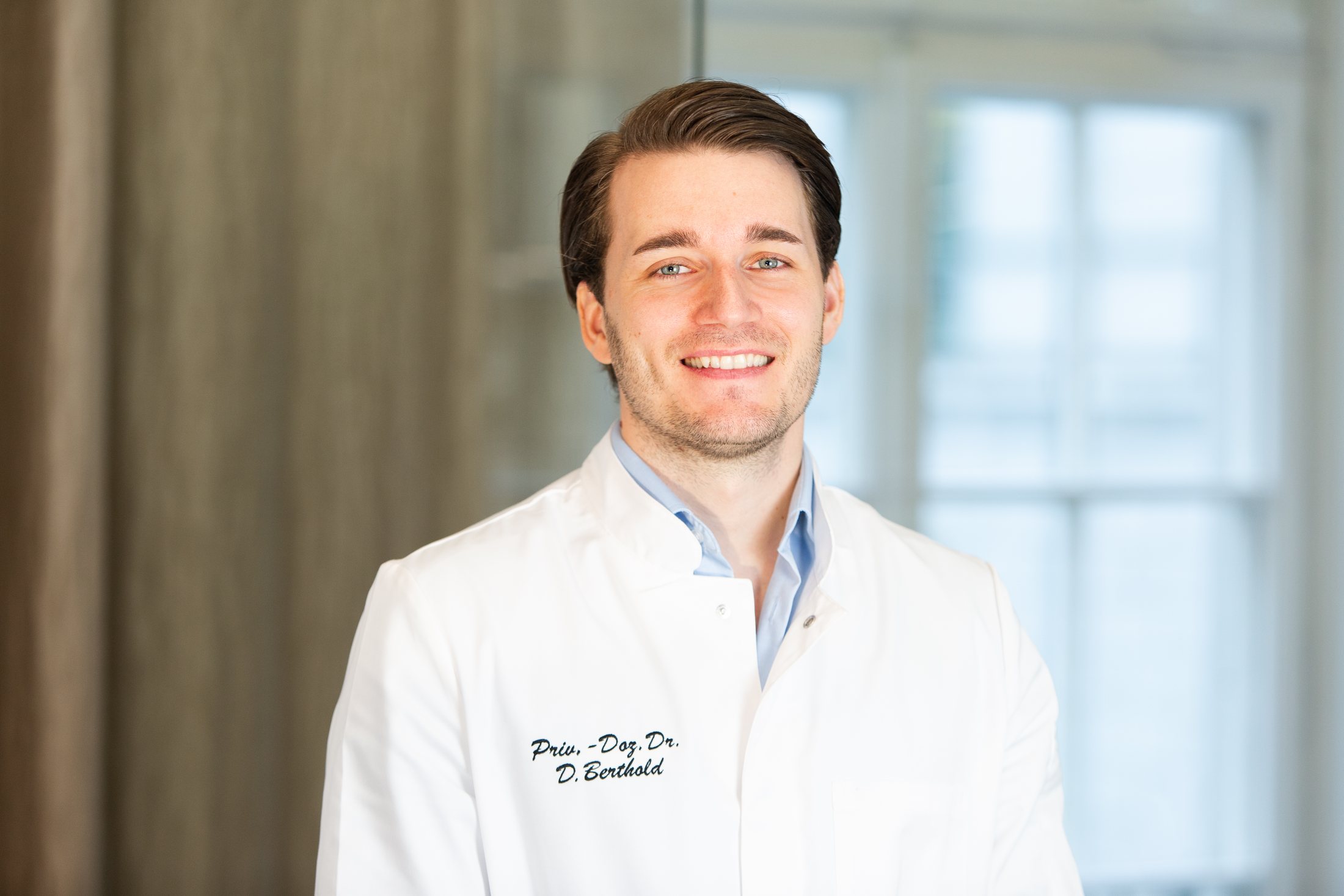
Author and medically responsiblePD Dr. med. Daniel P. BertholdSpecialist in Orthopaedics and Trauma SurgeryUpdated
Next step
Appointments and professional inquiries
Choose between a clinical appointment, second opinion, athlete care or a professional inquiry.