A rotator cuff tear does not automatically mean that surgery is needed. The decision depends not only on MRI images, but on the combination of pain, strength, mobility, how the injury happened, tendon quality, muscle condition, personal activity goals and a realistic chance of healing. An orthopaedic second opinion can help distinguish the structural finding from the functional problem that actually needs treatment [1], [2].
What is the rotator cuff?
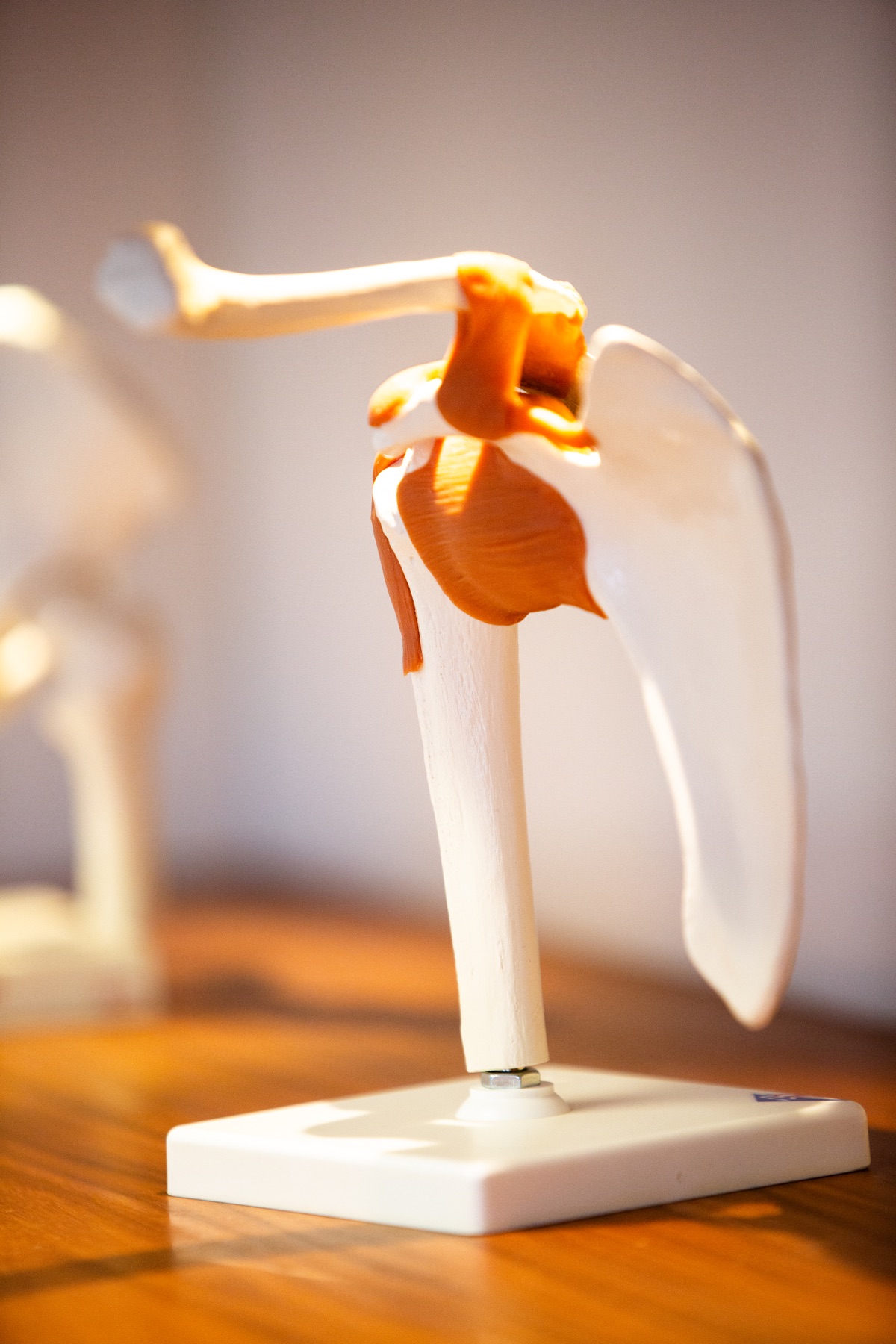
The rotator cuff consists of four muscles and their tendons: supraspinatus, infraspinatus, subscapularis and teres minor. It keeps the head of the upper arm bone centred in the shoulder socket and, together with the large shoulder muscle, allows the arm to lift and rotate.
A distinction is made between tendinopathy, partial tears and complete tears. A tear may affect one tendon or several tendons. A recent traumatic tear must also be distinguished from a degenerative change that has developed gradually. Many degenerative tears remain symptom-free for a long time; a tear on MRI alone therefore does not prove that it is causing the pain [1], [3].
Symptoms and clinical examination
Typical symptoms include pain when lifting the arm to the side, night pain, loss of strength, reduced ability to tolerate activity and difficulty with overhead movements. With a larger tear, active movements may be much more restricted than passive movements.
Clinical tests can point to a particular tendon, but cannot always reliably rule out a tear. A positive external or internal rotation lag sign is relatively specific for a full-thickness tear. Tests of the subscapularis tendon also tend to be specific, but have low sensitivity; a normal test therefore does not reliably rule out a lesion [4], [5].
A second-opinion assessment should therefore include at least:
- active and passive range of motion,
- strength compared with the other side,
- assessment of all four tendons,
- assessment of the biceps tendon, acromioclavicular (AC) joint and shoulder osteoarthritis,
- assessment of pain, night pain and activity tolerance,
- assessment for pseudoparalysis or marked loss of function.
Ultrasound, MRI or MR arthrography?
In studies, ultrasound, MRI and MR arthrography have high diagnostic accuracy for full-thickness rotator cuff tears. All methods are less sensitive for partial tears; MR arthrography may be more accurate in this setting, but is more invasive and is not routinely necessary [6].
A quality-assured ultrasound examination can be similarly reliable to MRI for full-thickness supraspinatus tears. Its value does, however, depend on the examiner's experience and the quality of the examination [6], [7].
In a second opinion, an MRI finding should not be reduced to the words “a tear is present”. Particularly relevant findings include:
- the tendons affected and the extent of the tear,
- whether the tear is partial-thickness or full-thickness,
- tendon retraction,
- muscle atrophy and fatty infiltration,
- the quality of the tendon stump,
- upward migration of the humeral head and rotator cuff arthropathy,
- associated findings involving the biceps, labrum, AC joint and cartilage [8].
Traumatic or degenerative tear?
A sudden event with immediate pain and new, objectively demonstrable loss of strength is more suggestive of a traumatic lesion. Typical mechanisms described include a fall onto an arm positioned behind the body with axial loading, or a traumatic shoulder dislocation [9]. A minor event, however, can also make a previously silent degenerative lesion symptomatic.
The terms “acute” and “traumatic” are not used consistently in the literature. Pogorzelski et al. propose using “acute” only when imaging shows signs of a recent injury, such as muscle oedema, joint effusion and characteristic changes in the torn tendon. These signs are most likely to be visible on imaging performed soon after the event. The proposal is useful, but is not a stand-alone rule for proving causation in an individual case [9].
Decision-making therefore requires the injury mechanism, initial findings, promptly documented loss of strength, imaging, pre-existing damage and clinical course to be assessed together. Being symptom-free before the event is an important clue, but proves neither the absence of degeneration nor, automatically, an exclusively traumatic cause.
Non-surgical treatment
Non-surgical treatment usually includes structured physiotherapy, adjustment of activity and loading, exercise for the rotator cuff and shoulder blade muscles, and a gradual return to everyday activities, work and sport. Depending on the situation, short-term pain medication or a targeted injection may be added.
An active exercise programme is central to treatment for tendinopathy and tears that are not full-thickness. A systematic review of partial tears found improvements in pain and function with both non-surgical and surgical treatments, but no convincing superiority of any particular surgical technique or of surgery overall [10].
Initial non-surgical treatment may also be appropriate for degenerative, non-traumatic supraspinatus tears. In a randomised trial, physiotherapy, acromioplasty and repair all produced clinical improvement after two years, without significant differences in the Constant score; non-surgical treatment was therefore considered a reasonable initial option for older patients [11].
However, decisions should not follow a rigid formula. A large tear, increasing loss of strength, significant retraction or early muscle degeneration may argue against waiting for a long time [2], [12].
Surgery or exercise first?
The best evidence mainly concerns small to medium-sized degenerative full-thickness tears, not every type of rotator cuff injury. The Cochrane review of surgery found only small average benefits in pain and function compared with exercise therapy after about one year. The included studies mainly involved older people with repairable, relatively small tears; large, traumatic or complex tears affecting several tendons were scarcely represented [13].
A pragmatic randomised trial found no advantage of surgery for lesions that were not full-thickness after an initial three-month rehabilitation programme. For full-thickness tears, pain and the Constant score improved more after two years in those who underwent surgery. However, the differences depended on the patient group, the preceding rehabilitation and several study withdrawals [14].
Another systematic review found a small average advantage of surgery for complete tears. Whether that difference is noticeable to an individual and outweighs the risks of surgery depends on tear size, age, activity goals, tissue quality and the response to treatment [15].
| Situation | Common initial strategy | Reasons for a timely second opinion |
|---|---|---|
| Tendinopathy or a small partial tear | Exercise, adjustment of activity and loading, pain treatment | persistent symptoms despite structured treatment or an unclear diagnosis |
| Small or medium-sized degenerative full-thickness tear | often initial non-surgical treatment with follow-up | increasing loss of strength, enlargement of the tear, high occupational or sporting demands |
| Acute traumatic tear with new loss of strength | timely specialist orthopaedic assessment | early retraction, tear affecting several tendons, pseudoparalysis or significant functional impairment |
| Large or massive tear | individual decision based on repairability and muscle quality | assessment of repair, partial repair, tendon transfer or joint replacement |
What surgical options are available?
For a repairable tear, the tendon is usually fixed to the bone arthroscopically. Depending on the findings, debridement, partial repair, treatment of the long head of the biceps tendon or targeted treatment of the AC joint may also be performed. The procedure must be chosen according to the actual damage; more extensive surgery is not automatically better surgery.
For large or irreparable tears, several options may be considered depending on age, osteoarthritis, muscle quality and functional goals:
- debridement and, where appropriate, biceps treatment when symptoms are mainly pain-related,
- partial repair to improve the balance of muscular forces,
- graft interposition or superior capsule reconstruction,
- tendon transfer in suitable younger or active patients,
- reverse shoulder replacement, particularly for irreparable rotator cuff insufficiency with osteoarthritis or marked loss of function.
The evidence for these procedures is considerably weaker than for smaller repairable tears. In a systematic review, clinical scores initially improved with all procedures. However, high retear rates of about 45% were reported for partial repairs; retear rates were lower for superior capsule reconstruction and graft interposition, but the procedures were technically demanding and the comparative data were mostly non-randomised. In several studies, the benefit of balloon spacers declined after about two years [16].
Healing, retears and prognosis
Successful surgery does not automatically mean that the tendon has healed completely. The risk of structural failure depends on factors including age, tear size, retraction, fatty infiltration, muscle atrophy, bone density, diabetes, nicotine use and involvement of several tendons [17], [18].
A meta-analysis of higher-quality clinical studies found retear rates of approximately 15 to 21% at different intervals after surgery. Larger tears and older age were associated with greater risk. Postoperative management of loading also affects healing; starting active loading too early can increase the risk. However, these averages cannot be used as an individual guarantee or as a personal percentage risk [19].
A retear does not always immediately worsen pain or mobility. Some patients achieve substantial clinical improvement despite structural failure. Conversely, a small tear can cause severe symptoms. Follow-up care therefore depends not only on imaging, but above all on actual function [1], [20].
PRP, ACP, hyaluronic acid and cell therapy
Bioregenerative procedures for rotator cuff disorders are often promoted using terms such as “healing”, “cartilage regeneration” or “biological repair”. However, the scientific evidence depends on the specific substance, application, dose, injection technique and diagnosis.
PRP and ACP
A meta-analysis of 18 level-1 studies found statistical improvements with PRP in pain, some functional scores and structural retears after repair. However, the average effects remained below the thresholds for a minimal clinically important improvement. Numerous different PRP preparations, activation methods and doses were also used [21].
In non-surgical treatment, a benefit over a well-delivered exercise programme has not been reliably established. A systematic review assessed the evidence on PRP, prolotherapy and cell products as heterogeneous and, overall, insufficient for a specific standard recommendation [22]. For partial tears, PRP may perform better than corticosteroids in the longer term, but the differences are not clinically noticeable in every study and comparability is limited [23].
Corticosteroids and hyaluronic acid
Corticosteroids can provide short-term pain relief. However, repeated injections and an injection close in time to a planned repair require careful consideration, because an increased risk of infection or revision surgery has been described [24].
For hyaluronic acid and other injectable preparations, there is no robust evidence that they reliably heal a structural rotator cuff tear or replace necessary surgery.
Cell and stem cell procedures
Mesenchymal stem cells, bone marrow aspirate and other cell products are scientifically interesting, but clinical use is not yet sufficiently standardised. The available data do not support a reliable conclusion that these procedures provide lasting, meaningful improvements in function, tendon healing or retear rates [18], [25].
A responsible second opinion should therefore distinguish between:
- established exercise and progressive loading,
- a possible additional treatment supported by limited evidence,
- experimental or insufficiently tested procedures,
- purely promotional promises of healing without robust comparative data.
Returning to work and sport
Shoulder function may improve substantially after non-surgical treatment or surgery. However, fully normal strength, normal mobility or a safe return to the previous level of sport is not guaranteed. Expectations should be cautious, particularly with large tears, involvement of several tendons, muscle atrophy and older age [26], [27].
Return to work or sport should not be based only on a fixed period of time. More useful criteria include pain-free everyday activities, adequate mobility, strength that is as symmetrical as possible, good shoulder blade control and sport-specific tests. However, these criteria are not consistently defined in the literature on rotator cuff surgery [28].
When is a second opinion particularly useful?
A second opinion is especially valuable when:
- MRI shows a tear, but the symptoms do not clearly match it,
- surgery has been recommended without documented loss of strength or function,
- an acute traumatic tear needs to be distinguished from a degenerative tear,
- there is a large tear or one affecting several tendons,
- retraction, atrophy or fatty infiltration has already been described,
- a retear has been found after repair,
- PRP, ACP, hyaluronic acid or cell therapy is being offered as a supposed alternative to exercise or surgery,
- complex surgery, a tendon transfer or a reverse shoulder replacement has been proposed.
Questions to ask at an orthopaedic second opinion
- Which tendons are actually affected, and how large is the tear?
- Does the tear match the symptoms and the objective loss of strength?
- Are there signs of a recent traumatic lesion, or is a degenerative process more likely?
- Can the tendon be repaired, and how should retraction, muscle atrophy and fatty infiltration be assessed?
- What realistic advantages does surgery offer over a structured exercise programme?
- What is the individual risk of failure to heal or of a retear?
- What roles do the biceps tendon, AC joint, osteoarthritis and shoulder blade function play?
- Is a bioregenerative procedure scientifically supported, only an additional option, or experimental?
- What specific criteria apply to returning to work, everyday activities and sport?
An individual treatment decision requires a complete examination, a joint discussion of the images and consideration of personal goals. This article provides general information and does not replace a medical examination or treatment recommendation.
References
[1] E. J. Curry, E. Matzkin, Y. Dong, L. Higgins, J. Katz, and N. Jain, “Structural Characteristics Are Not Associated With Pain and Function in Rotator Cuff Tears,” Orthopaedic Journal of Sports Medicine, vol. 3, May 2015, doi: 10.1177/2325967115584596.
[2] T. Moran and B. C. Werner, “Surgery and Rotator Cuff Disease: A Review of the Natural History, Indications, and Outcomes of Nonoperative and Operative Treatment of Rotator Cuff Tears.” Clinics in sports medicine, vol. 42 1, pp. 1–24, Jan. 2023, doi: 10.1016/j.csm.2022.08.001.
[3] S. Sambandam, V. Khanna, A. Gul, and V. Mounasamy, “Rotator cuff tears: An evidence based approach.” World journal of orthopedics, vol. 6 11, pp. 902–18, Dec. 2015, doi: 10.5312/wjo.v6.i11.902.
[4] J. Hermans, J. Luime, D. Meuffels, M. Reijman, D. Simel, and S. Bierma-Zeinstra, “Does this patient with shoulder pain have rotator cuff disease?: The Rational Clinical Examination systematic review.” JAMA, vol. 310 8, pp. 837–47, Aug. 2013, doi: 10.1001/jama.2013.276187.
[5] A. Lädermann, P. Collin, O. Zbinden, T. Meynard, M. Saffarini, and J. Chiu, “Diagnostic Accuracy of Clinical Tests for Subscapularis Tears: A Systematic Review and Meta-analysis,” Orthopaedic Journal of Sports Medicine, vol. 9, Sep. 2021, doi: 10.1177/23259671211042011.
[6] J.-S. Roy et al., “Diagnostic accuracy of ultrasonography, MRI and MR arthrography in the characterisation of rotator cuff disorders: a systematic review and meta-analysis,” British Journal of Sports Medicine, vol. 49, pp. 1316–1328, Feb. 2015, doi: 10.1136/bjsports-2014-094148.
[7] A. S. Farooqi et al., “Diagnostic Accuracy of Ultrasonography for Rotator Cuff Tears: A Systematic Review and Meta-analysis,” Orthopaedic Journal of Sports Medicine, vol. 9, Oct. 2021, doi: 10.1177/23259671211035106.
[8] L. A. Fitzpatrick, A. Atinga, L. White, P. Henry, and L. Probyn, “Rotator Cuff Injury and Repair,” Seminars in Musculoskeletal Radiology, vol. 26, pp. 585–596, Oct. 2022, doi: 10.1055/s-0042-1756167.
[9] J. Pogorzelski et al., “Definition of the terms ‘acute’ and ‘traumatic’ in rotator cuff injuries: a systematic review and call for standardization in nomenclature,” Archives of Orthopaedic and Trauma Surgery, vol. 141, pp. 75–91, Nov. 2020, doi: 10.1007/s00402-020-03656-4.
[10] B. H. F. Eubank et al., “A Scoping Review and Best Evidence Synthesis for Treatment of Partial-Thickness Rotator Cuff Tears.” Journal of shoulder and elbow surgery, Dec. 2023, doi: 10.1016/j.jse.2023.10.027.
[11] J. Kukkonen et al., “Treatment of Nontraumatic Rotator Cuff Tears: A Randomized Controlled Trial with Two Years of Clinical and Imaging Follow-up.” The Journal of bone and joint surgery. American volume, vol. 97 21, pp. 1729–37, Nov. 2015, doi: 10.2106/JBJS.N.01051.
[12] J. Keener, B. Patterson, N. Orvets, and A. M. Chamberlain, “Degenerative Rotator Cuff Tears: Refining Surgical Indications Based on Natural History Data,” The Journal of the American Academy of Orthopaedic Surgeons, vol. 27, pp. 156–165, Mar. 2019, doi: 10.5435/JAAOS-D-17-00480.
[13] T. Karjalainen, N. Jain, J. Heikkinen, R. V. Johnston, C. M. Page, and R. Buchbinder, “Surgery for rotator cuff tears.” The Cochrane database of systematic reviews, vol. 12, pp. CD013502, Dec. 2019, doi: 10.1002/14651858.CD013502.
[14] S. Cederqvist et al., “Non-surgical and surgical treatments for rotator cuff disease: a pragmatic randomised clinical trial with 2-year follow-up after initial rehabilitation,” Annals of the Rheumatic Diseases, vol. 80, pp. 796–802, Dec. 2020, doi: 10.1136/annrheumdis-2020-219099.
[15] C. Schmucker, V. Titscher, C. Braun, B. Nussbaumer-Streit, G. Gartlehner, and J. Meerpohl, “Surgical and Non-Surgical Interventions in Complete Rotator Cuff Tears.” Deutsches Arzteblatt international, vol. 117 38, pp. 633–640, Sep. 2020, doi: 10.3238/ARZTEBL.2020.0633.
[16] A. Davies, P. Singh, P. Reilly, S. Sabharwal, and A. Malhas, “Superior capsule reconstruction, partial cuff repair, graft interposition, arthroscopic debridement or balloon spacers for large and massive irreparable rotator cuff tears: a systematic review and meta-analysis,” Journal of Orthopaedic Surgery and Research, vol. 17, Dec. 2022, doi: 10.1186/s13018-022-03411-y.
[17] C. Baum, A. Müller, L. Audigé, and T. Stojanov, “Prognostische Faktoren der arthroskopischen Rotatorenmanschettenrekonstruktion,” Arthroskopie, vol. 34, pp. 179–184, Feb. 2021, doi: 10.1007/s00142-021-00439-w.
[18] A. M. Abtahi, E. K. Granger, and R. Tashjian, “Factors affecting healing after arthroscopic rotator cuff repair.” World journal of orthopedics, vol. 6 2, pp. 211–20, Mar. 2015, doi: 10.5312/wjo.v6.i2.211.
[19] U. Longo et al., “Retear rates after rotator cuff surgery: a systematic review and meta-analysis,” BMC Musculoskeletal Disorders, vol. 22, Aug. 2021, doi: 10.1186/s12891-021-04634-6.
[20] I. Galanopoulos, A. Ilias, K. Karliaftis, D. Papadopoulos, and N. Ashwood, “The Impact of Re-tear on the Clinical Outcome after Rotator Cuff Repair Using Open or Arthroscopic Techniques – A Systematic Review,” The Open Orthopaedics Journal, vol. 11, pp. 95–107, Feb. 2017, doi: 10.2174/1874325001711010095.
[21] X. T. Chen, I. A. Jones, R. Togashi, C. Park, and C. Vangsness, “Use of Platelet-Rich Plasma for the Improvement of Pain and Function in Rotator Cuff Tears,” The American journal of sports medicine, vol. 48, pp. 2028–2041, Nov. 2019, doi: 10.1177/0363546519881423.
[22] D. Robinson et al., “Non-operative orthobiologic use for rotator cuff disorders and glenohumeral osteoarthritis: A systematic review,” Journal of Back and Musculoskeletal Rehabilitation, vol. 34, pp. 17–32, Nov. 2020, doi: 10.3233/BMR-201844.
[23] E. G. de Sanctis, E. Franceschetti, F. D. Dona, A. Palumbo, M. Paciotti, and F. Franceschi, “The Efficacy of Injections for Partial Rotator Cuff Tears: A Systematic Review,” Journal of Clinical Medicine, vol. 10, Dec. 2020, doi: 10.3390/jcm10010051.
[24] R. N. Puzzitiello, B. H. Patel, B. U. Nwachukwu, A. Allen, B. Forsythe, and M. J. Salzler, “Adverse impact of corticosteroid injection on rotator cuff tendon health and repair: A systematic review.” Arthroscopy : the journal of arthroscopic & related surgery : official publication of the Arthroscopy Association of North America and the International Arthroscopy Association, Dec. 2019, doi: 10.1016/j.arthro.2019.12.006.
[25] D. Kovacevic, R. Suriani, W. Levine, and S. Thomopoulos, “Augmentation of Rotator Cuff Healing with Orthobiologics,” The Journal of the American Academy of Orthopaedic Surgeons, vol. 30, pp. e508–e516, Dec. 2021, doi: 10.5435/JAAOS-D-20-01011.
[26] S. Namdari, P. Voleti, K. Baldwin, D. Glaser, and G. Huffman, “Latissimus dorsi tendon transfer for irreparable rotator cuff tears: a systematic review.” The Journal of bone and joint surgery. American volume, vol. 94 10, pp. 891–8, May 2012, doi: 10.2106/JBJS.K.00841.
[27] N. K. Kucirek, N. J. Hung, and S. E. Wong, “Treatment Options for Massive Irreparable Rotator Cuff Tears,” Current Reviews in Musculoskeletal Medicine, vol. 14, pp. 304–315, Sep. 2021, doi: 10.1007/s12178-021-09714-7.
[28] R. Griffith et al., “Return-to-Sport Criteria After Upper Extremity Surgery in Athletes—A Scoping Review, Part 1: Rotator Cuff and Shoulder Stabilization Procedures,” Orthopaedic Journal of Sports Medicine, vol. 9, Aug. 2021, doi: 10.1177/23259671211021827.